
Reflex overview

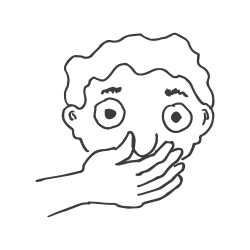
Respiratory Protection Reflex
The Respiratory Protection Reflex leads to a blockage (reflexive hold) of breathing if the external airways (mouth and nose) are filled with water. This reflex can also be triggered by a strong wind (e.g. when parachuting) or strong emotions (e.g. a burst of anger). Initially a reflexive protection of the respiratory organs, it should be subject to conscious control in the integrated state.
Typical, possible symptoms of a persistent reflex:
- Low self-confidence
- Hypoxia (= lack of oxygen)
- Holding your breath at the wrong moments (e.g. parachuting, scuba diving, etc.)
- Difficulties to take action and poor concentration

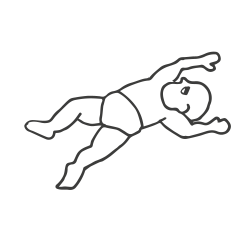
Moro Reflex
On the one hand, the Moro Reflex trains the baby's breathing muscles. Immediately after birth, it helps to stimulate breathing with the "first cry". On the other hand, this reflex is about "falling", in which we first open up completely so that we can still reach for something or be grabbed, and then make ourselves as small as possible in order to protect ourselves.
Typical, possible symptoms of a persistent reflex:
- Hypersensitivity of the vestibular system (problems with balance)
- Hypersensitivity (to light, touch, smell, taste, (background) noise, depth sensitivity)
- Restricted peripheral vision (mainly perception of things around you)
- High stress levels, anxiety and aggression
- Difficulties with breathing, shortness of breath
- Pressure in the upper abdomen (diaphragmatic tone)
- Low self-esteem
- Feeling of defenselessness, insecurity and imbalance

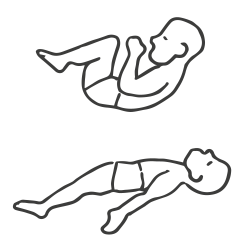
Tonic Labyrinth Reflex (TLR)
The TLR helps the newborn to deal with gravity, and to develop depth sensitivity as well as the perception of body and head in space. The aim is to uncouple the neck muscles from the torso muscles and/or neck movements from torso movements and thus achieve calmness despite tension.
Typical, possible symptoms of a persistent reflex:
- Poor posture
- Low muscle tone (due to lack of cerebellar stimulation)
- Coordination problems (→ space, distance, range, depth are difficult to judge)
- Rather disorganized and chaotic
- Tension in the shoulder/neck area (→ high muscle tone)
- Orientation problems (poor spatial orientation)
- Toe / heel walker (including problems with the Achilles tendon)
- Fear of heights, dizziness and motion sickness

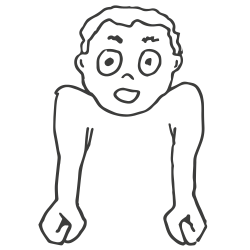
Fear Paralysis Reflex (FPR)
The FPR serves to develop the natural stress protection mechanisms of humans (known in the animal kingdom as the “play dead” reflex). This reflex symbolizes a feeling of agitation and unease in the upper abdomen, initially having a paralyzing effect, which makes sense for an infant. If it is integrated, you can choose in the event of a threat, whether negotiation, flight or fight is appropriate.
Typical, possible symptoms of a persistent reflex:
- Takes away the freedom to choose how to react to a threat: Stay still, fight or flight
- Weakened immune system → Frequent infections and allergies
- Anxious, restless type
- „Freeze” state: uncertain pause when action would be necessary
- Activation of survival patterns → Release of stress hormones (increased adrenaline and cortisol)
- Problems with attention / concentration
- Hypersensitivity (→ all senses are activated too intensively), low stress tolerance
- Serotonin / amino acid deficiency and gluten intolerance

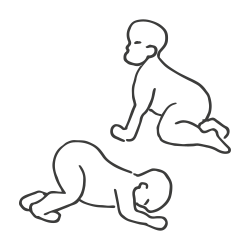
Symmetrical Tonic Neck Reflex
The STNR has both a physical and a psychosocial function. From a physical point of view, this reflex represents the training to come to the “all fours” position from laying on our belly by bending the legs. It is the “start reflex” so to speak (start walking, crawling, running, sprinting). From a psychosomatic perspective, the STNR is about the calmness that enables us to perceive sensory stimuli without muscular impulses and without physical tension. This gives us a certain security in space and we can choose the appropriate level of tension.
Typical, possible symptoms of a persistent reflex:
- Limited ability to think and difficulty in taking action
- Turned pelvis → leg length difference
- Coordination and balance issues
- Serotonin and amino acid deficiency
- Short-sightedness and reading difficulties
- Thoracic spine kyphosis (hunchback)
- Sitting with legs folded under (→ increased tension in the legs) as well as poor posture
- Lack of security, lightness, ease and joy

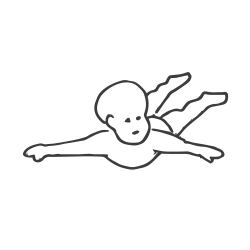
Landau Reflex
The Landau Reflex is important for straightening (stretching) the spine and the associated development of balance, depth sensitivity and spatial orientation. The breathing excursion and the urge to discover lift the upper body. Neck and pelvic muscles initially work synchronously, but should be able to function uncoupled in adulthood. The aim is to tense the torso and breathing muscles separately, so that the trunk and diaphragm muscles work independently (→ no holding your breath when lifting a weight).
Typical, possible symptoms of a persistent reflex:
- Toe walker
- Poor body / sitting posture → head (often leaning on hands) and gaze tend to be directed downward → obstruction of breathing
- Problems with attention and concentration
- Probleme mit Aufmerksamkeit und Konzentration
- Knee pain
- Poor body coordination
- Poor stamina
- Stomach/intestinal problems
- Legs very tense and stretched backwards (high muscle tone in the extensors)

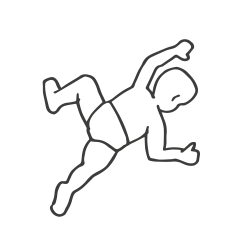
Amphibian Reflex
The Amphibian Reflex is, in contrary to all other reflexes mentioned here (two further exceptions: respiratory reflex and fall protection reflex), a lifelong postural reflex. This means that this reflex should be active for life. Nevertheless, the Amphibian Reflex belongs to the early childhood reflexes. Its task is the alternating flexion of the legs (with lateral extension of the arms) in a prone position to move forward on the ground and thus reach a destination.
Typical, possible symptoms of a persistent reflex:
- Low self-confidence
- Knee problems extending to arthrosis in the knee
- Hip problems extending to arthrosis in the hip
- Sluggishness when walking (lack of knee flexion)
- Leg(s) outstretched when walking
- Shyness
- Problems with coordination
- Learning difficulties

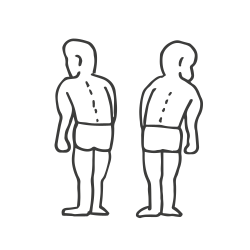
Spinal Galant Reflex
The Spinal Galant Reflex is responsible for turning in or out of the birth canal. It is important for the development of body rotations, for the development of the sense of balance as well as for the development of motor skills. This reflex is also responsible for emptying the bladder. Bilateral stroking along the side of the spine (bladder meridian) has an effect on the bladder.
Typical, possible symptoms of a persistent reflex:
- Difficulties to act and poor concentration
- Hip and knee problems
- Motor restlessness and hyperactivity (→ Fidgety behaviour, especially when sitting)
- General nutrient deficiency (vitamins, minerals and amino acids)
- Making yourself small
- Back and pelvic pain
- Lack of fluid movement sequences
- One-sided curvature of the spine (scoliosis)

Asymmetric Tonic Neck Reflex
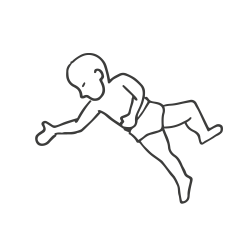
The ATNR plays a crucial role in the birth process through its characteristic “push-off or screw-out movement”. The crossover movements controlled by the ATNR integrate (connect) both hemispheres of the brain. The right and left halves of the body differentiate with a clear midline (right-left distinction), resulting in side dominance. In addition, the ATNR develops the auditory and visual systems (auditory and visual perception) and thus forms the basis for binaural hearing and binocular vision. The aim is to develop the ability to find the most stable and expedient body position.
Typical, possible symptoms of a persistent reflex:
- Uncoordinated arm and leg movements (especially with cross-over movements) → Right-left weakness
- Sciatica and twisted pelvis
- Spinal problems and herniated discs
- Reading and spelling difficulties (Dyslexia)
- Neck tension as well as knee and hip problems
- Impaired hand-eye coordination
- No hand preference - lack of automatic choice
- Sleep disorders, restlessness and unhappiness

Babinski Reflex
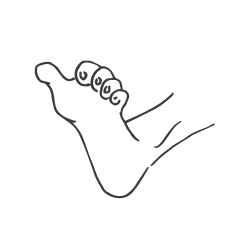
In the first step, the Babinski Reflex causes the toes to fan out in order to provide a stable base for standing upright safely. The aim is to “lengthen” or stand upright as a human being on two legs. In the second step, we screw ourselves firmly into the ground by developing the arch of the foot and thus securing the necessary stability in the ground. The Babinski Reflex therefore trains the foot and leg muscles for a steady upright posture.
Typical, possible symptoms of a persistent reflex:
- Muscular tension in the legs and abnormal tension in the whole body
- Weak ankles and problems with the ankle joints (→ more frequent twisting possible)
- Foot misalignments and gait disorders
- Hip pain and hip arthrosis
- Weak arch of the foot (flat foot, fallen arches, splayfoot)
- Weak balance and coordination
- Hammer toes and corns (as well as holes in the socks at the big toe)
- Bowlegs / knock-knees → Foot, knee and hip problems

Stride Reflex
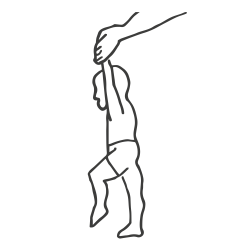
The Stride Reflex can also be described by the terms stride reaction or stride automatism. When the baby is being held upright and touches a surface with the soles of its feet, it makes automatic striding movements. The reflex serves to achieve a coordinated, laterally asynchronous flexion and extension of the lower extremities. The aim of the Stride Reflex is, on the one hand, activity and coordination in the lower limbs and, on the other, the ability to choose one's future pace with the help of patience learned through the reflex.
Typical, possible symptoms of a persistent reflex:
- Knee and hip problems extending to arthrosis
- Mental uncertainty and difficulty making clear decisions
- Sluggishness when walking
- Lack of calmness and balance
- Impatience and restlessness or lack of drive
- Low self-esteem
- Uncoordinated leg movements
- Muscular tension in the legs and abnormal tension in the whole body

Babkin / Palmar Reflex
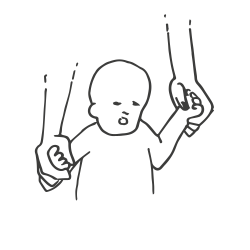
The Babkin or Palmar Reflex is about the shift from tension in the hands to fine motor development. This reflex develops the sense of touch (→ tactile response) through the combination of training the hand / finger muscles and controlling the fine motor hand movement. In addition, contact in the baby's palms causes the baby's mouth to open. This reflex helps the baby to suckle at the breast when breastfeeding. The Babkin reaction shows that there are neurological connections between hand and mouth motor skills.
Typical, possible symptoms of a persistent reflex:
- Sensitivity to touch of the palms of the hands and the face
- Involuntary mouth / tongue movements and increased salivation
- Poor fine motor skills
- Disturbance in the metabolism of vitamin B6, manganese, phosphates and methyl folate
- Tension in the temporomandibular joint
- Teeth grinding
- Muscle tension in the arms
- Depression and life crises

Spinal Perez Reflex
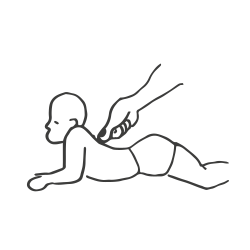
The idea of the Spinal Perez Reflex is a protective tension of the spine, so that we adopt a protective posture in the event of imminent danger or a dangerous stimulus, as well as the coordinated, crossed leg-back tension build-up. This is achieved by activating the small muscles between the vertebrae. In an integrated - non-permanently active - state, relaxation and lightness can be allowed without having to react to every (epicritic) stimulus.
Typical, possible symptoms of a persistent reflex:
- Low self-esteem
- Hypersensitivity (sensitivity to touch, light, (background) noise, smell, taste, depth sensitivity)
- Restlessness and slight irritability
- Shoulder and neck tension / general tension (→ lack of relaxation, calmness and balance)
- Hip and knee joint problems
- Spinal problems (hyperlordosis in the lumbar and/or cervical spine)
- Lack of far / perspective vision
- Macro and micronutrient deficiency due to increased body consumption

Grasping Reflex
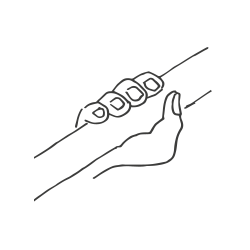
The Grasping Reflex is responsible, among other things, for the development of hand motor skills as well as hand-eye and hand-mouth coordination. Together with the Plantar Reflex, it prepares for the differentiation of the right and left sides and establishes the first pathway of voluntary action (→ “do I want to – don’t I want to”). The baby thus acquires control over its hands and fingers.
Typical, possible symptoms of a persistent reflex:
- Sensitivity to touch of the palms of the hands and the face
- Firm, incorrect and/or cramped pen grip
- Headaches extending to migraines
- Poor gross motor skills
- Teeth grinding and misaligned teeth
- Muscle tension in the hands
- Insecure hand-eye coordination
- Poor manual dexterity (with differentiated finger movements)

Plantar Reflex
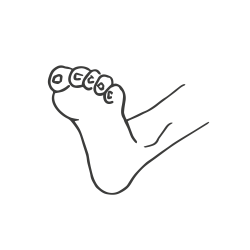
The Plantar Reflex has various roles. It prepares the child to distinguish between the right and left sides and, together with the Grasping Reflex, develops hand-foot coordination. For the first time, you gain control over your feet and toes and an initial pathway of willfulness is created (→ “do I want to – don’t I don't want to”). The Plantar Reflex trains the foot and toe muscles and also protects us from sharp objects on the ground.
Typical, possible symptoms of a persistent reflex:
- Mental uncertainty and difficulty making clear decisions
- Malfunction of the arch of the foot
- Incorrect loading of the foot → poor foot motor skills and rolling movement
- Hip and knee problems extending to arthrosis
- Tension in the temporomandibular joint
- Teeth grinding
- Toe walkers (shortened Achilles tendon)
- Sciatica

Pull-up Reflex
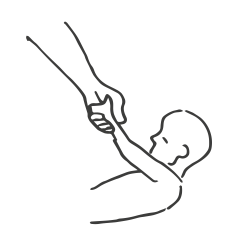
Through the Pull-up Reflex, the baby develops the ability to pull itself upwards on its parents' hands when lying on its back. The subsequent lifting of the head causes the flexor muscles of the arms to tense and at the same time serves to develop the shoulder motor skills. The aim is to develop the ventral trunk and arm muscles as well as stability in trunk flexion.
Typical, possible symptoms of a persistent reflex:
- Struggling to write / not writing nicely
- Muscle tension in the hands and arms
- Increased susceptibility to stress
- Lack of inner peace and low self-esteem
- Poor gross motor skills
- Addictions
- Shoulder and neck tension
- Headaches including migraines

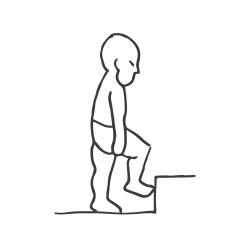
Climbing Reflex
The Climbing Reflex, also known as the “placing reaction”, is triggered in infants by a stimulus on the back of the foot or on the lower third of the infant's shin by stroking these areas along the edge of a table, for example, and simultaneously moving the upper body forwards. The triggering moment is the body's center of gravity, which moves to the front of the forefoot (approx. 15 to 20° forward tilt). The response to this stimulus is to pull the leg up as if the child wanted to climb a step. The purpose of this reflex is to secure the upright position without falling.
Typical, possible symptoms of a persistent reflex:
- Legs very tense (high muscle tone in the extensors)
- Uncoordinated leg movements / shuffling (→ tendency to fall, e.g. on curbs)
- Body posture bent forward
- Coordination / balance problems (poor body coordination)
- Knee and hip problems through to arthrosis
- Lack of inner peace and low self-esteem
- Legs stretched when walking
- Muscular tension in the legs and abnormal tension in the whole body

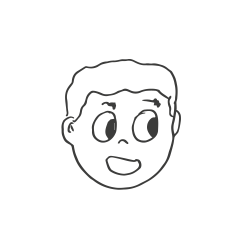
Search Reflex
The Search Reflex is one of the most basic reflexes that are essential for survival and has simple motor functions in order to approach the nutrient source. The Search Reflex is primarily controlled vegetatively (hunger) and has a strong emotional connection. In a figurative sense, it is about the search for stimulus satisfaction and a safe, quiet place.
Typical, possible symptoms of a persistent reflex:
- Addictions
- Anxiety disorders
- Sleep disorders
- Hypersensitivity (to touch and taste)
- Problems with attention and concentration
- Intestinal sluggishness → resulting in malabsorption and digestive disorders
- Lack of self-care
- Lack of fluid movement sequences

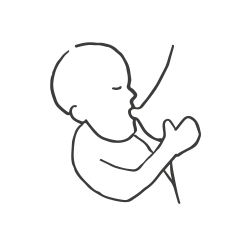
Sucking Reflex
The Sucking Reflex gets its name from sucking on the mother's breast. It develops the tongue muscles, the fine motor skills of lip and tongue as well as the natural swallowing pattern. Strengthening the mouth muscles stimulates muscle strength in the neck and mouth and thus helps prepare for speech. This reflex is about the search for something that fulfills/satiates me while at the same time I am afraid of not getting enough. The Sucking Reflex is a vegetative and emotional reflex.
Typical, possible symptoms of a persistent reflex:
- Teeth grinding and misaligned teeth (→ as the tongue is at the front of the teeth)
- Choking and problems with eating
- Sleep disorders / snoring
- Generally open mouth and increased salivation
- Tongue hangs out of the mouth
- Addictions
- Articulation problems (→ tongue is not in the right place)
- Serotonin deficiency

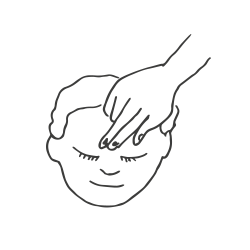
Glabella Reflex
The Glabella Reflex causes the eyelids to close to protect the eyes in the event of an external, periocular stimulus or an external danger to the eyes. This reflex can be triggered somatosensitively by pressure on the glabella (bone connecting line between the eyebrows) or by loud acoustic stimuli. The aim is controlled, relaxed eye protection and vegetative decoupling of the various senses and the vagus reaction. This can then be seen in relaxed, adequate facial expressions, as well as in conscious vision or improved visual perception.
Typical, possible symptoms of a persistent reflex:
- Restless, tense type
- Easily irritated
- Poor image perception
- Restricted peripheral vision (mainly perception of things around you)
- Hypersensitivity (to light, touch, sounds)
- Tense facial expressions and difficulty visualizing objects

Fall Protection Reflex
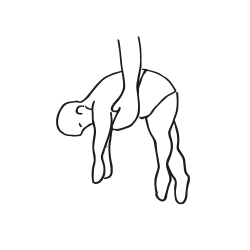
Medically referred to as “readiness to jump”, the term Fall Protection Reflex is more appropriate. If a child is held horizontally in the air and you then quickly lower the child's upper body or quickly tilt it forward (approx. 40 to 45°), it automatically stretches its arms forward and supports itself with its hands. This reflex also serves as protection if an object flies towards their face or body. The aim is to protect the head and sensory organs. The Fall Protection Reflex is a lifelong protective reflex. Integration creates emotional calm.
Typical, possible symptoms of a persistent reflex:
- Lack of protective posture when falling (e.g. falling on the face without catching oneself)
- Lack of protective reaction when an object flies towards his face or body
- Lack of emotional calm

Bauer Reaction
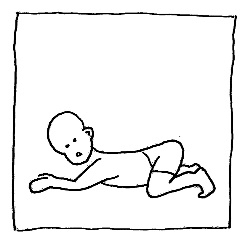
The Bauer Reaction is a vegetative emotional reflex and a necessary reaction to prevent infant suffocation. If the baby is lying on its stomach and can no longer breathe, it turns its head with a reflex-like “push-off movement” of the leg in order to be able to breathe in again. This reflex is thus triggered by the drop in oxygen, which determines the need for action / movement. (→ “How much threatening stimulus do I allow to happen before I act?”). The aim is to act early and appropriately according to the perception of a threatening situation (= action competence).
Typical, possible symptoms of a persistent reflex:
- High stress levels, sleep problems and anxiety
- Difficulties with breathing, shortness of breath
- Boundary problems

Indian Reflex
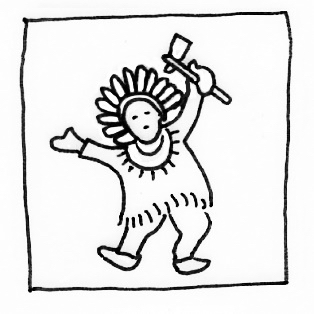
Your greatest Greatness
To always be able to realise that even in what you feel to be your “smallest”, “weakest” moments, when you are at your most vulnerable, you are still yourself and still just as great/worthy.

Letting Go Reflex
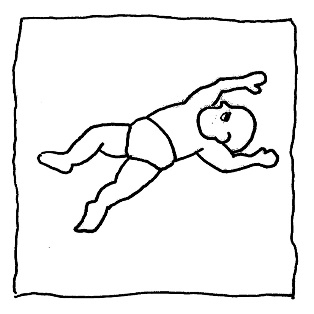
Letting go or sitting back and relaxing → trusting life
I can let go at any time. I trust myself, my body and life in general. I can just sit back and relax from time to time. Even if I am vulnerable / offer a lot of potential for attack, I can still
always protect myself completely.
→ Trust

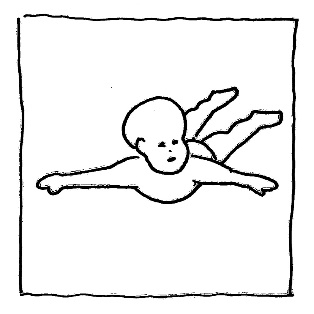
Discovery Reflex
There is also something else besides my suffering → Discovering new things
There is always something new, beautiful and positive to discover (even if everything seems dreary, sad and hopeless at the moment). You can see the world through a positive lens and
a negative lens.
→ Goal: Positive view of things + looking forward to what is yet to come.

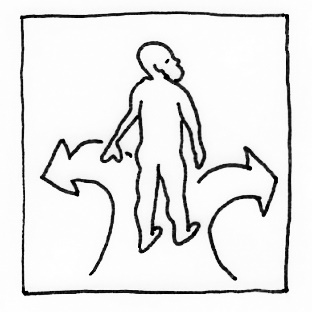
Friedrich Reflex (Decision Reflex)
I am the one who makes the decision and every decision is right
Clear knowledge of what I want and what I don't want. I don't need outside help; I know it myself. I stand by the decisions I make and I know that my decisions are right. I have to make my own decisions. (→ Personal responsibility). My decisions, no matter what direction they take, are the right ones.

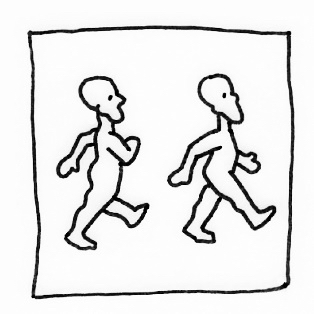
Forward Reflex
There is always a solution
I know that I am always moving forward (no matter at what pace). I am always progressing, moving ahead (no matter how bad I may feel right now). I move forward step by step. I don't always have to run.

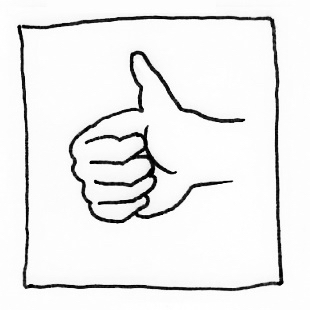
All-is-Good Reflex
I can't do/say anything wrong; I don't need any external confirmation
I am good the way I am, with all my faults, weaknesses, problems, etc. I don't need any validation from the outside to know that I am good. I am the architect of my own happiness. In turn, I can also let things go and allow others to be the way they are.

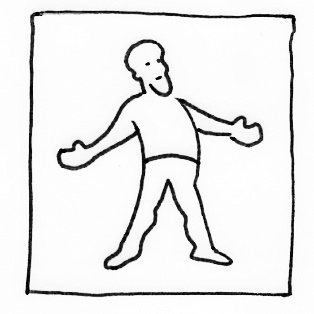
Giant Reflex
My greatness is untouchable
Everyone has the same greatness / is equally loved by God. I am allowed to stretch myself and consciously make myself big. I show my true greatness. I don't have to hide (behind
others or a cause). Every person is worth the same.
→ Knowing your true greatness

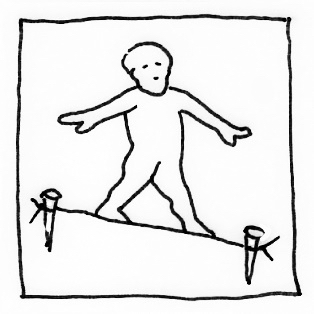
Balance Reflex
I can always be both without losing my balance
I always find the right balance. I am both sides of the poles, yet I never lose my balance. I am evenly balanced in my own range (of feelings and emotions). Everything has two poles (harmony ← → anger, conflict, ...). I can control these two poles within myself at all times. I am stable and secure in life.

Protective Reflex
Post-traumatic reflex
A protective mechanism developed after traumatic events or experiences in order to protect either oneself or another person. Integration creates emotional calm and openness.

Gagging Reflex
Vegetative reflex
The Gagging reflex is triggered by an unpleasant stimulus (taste and/or smell) combined with a linked negative emotion (anger and/or fear). The aim is to feel completely comfortable in your body again, to trust yourself and to enjoy your life to the full.


The book on the method
Under the following link you can order your own copy and find out everything you need to know about this new method and the exciting topic of early childhood reflexes.